Why Go Tankless?
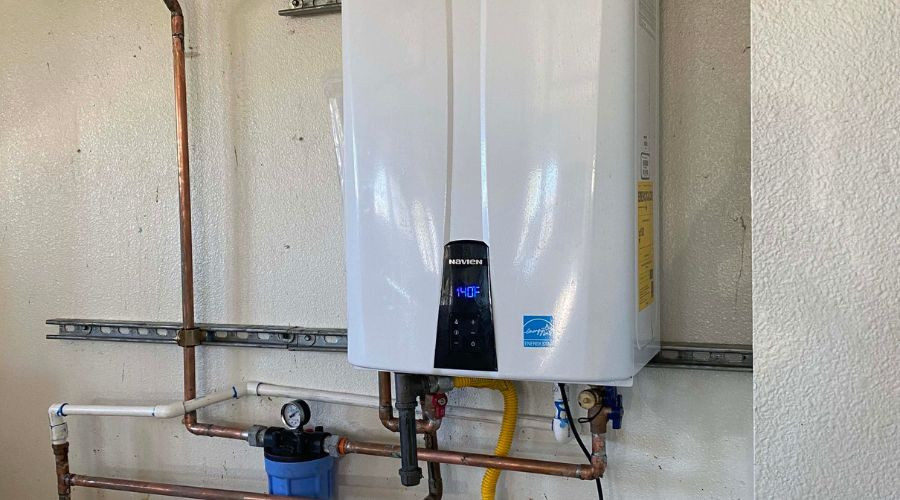
Installing a tankless water heater offers a practical solution for reducing energy bills and replacing outdated systems. This upgrade brings cost savings, space efficiency, and an endless supply of hot water. With its energy-smart design, a tankless unit delivers immediate comfort and long-term financial benefits. Explore the full potential of this transformative home improvement and unlock a new standard in water heating.
Energy Efficiency
 Tankless water heaters offer outstanding energy efficiency compared to traditional storage tank models, with potential annual savings on water heating costs ranging from 24% to 34%. Unlike storage systems that continuously heat a large volume of water, tankless models operate only when hot water is required. This on-demand functionality eliminates standby energy loss.
Advanced tankless systems achieve energy efficiency ratings between 0.82 and 0.98, whereas standard tank heaters often peak at about 0.60, based on data from the Department of Energy. These ratings translate into noticeable reductions in utility expenses.
Over time, the financial advantages become increasingly significant. A household using approximately 41 gallons of hot water per day may save around $100 annually with a tankless unit, while homes with greater hot water needs experience even larger savings. Eligibility for energy rebates and government incentives enhances the overall value. Tankless systems also retain efficiency across a lifespan exceeding 20 years, far outlasting many traditional options.
Endless Hot Water Supply and Space Savings
 Tankless systems deliver an uninterrupted flow of hot water by heating water as it passes through the unit, avoiding the limitations of preheated tank storage. Activation occurs only when a hot water fixture is turned on, ensuring immediate and continuous heating. The result: consistent water temperature with no need to wait for recovery cycles.
This technology supports simultaneous hot water usage, such as running a shower and a dishwasher, without diminishing performance. Many tankless models produce between 2-5 gallons per minute, accommodating high-demand situations with ease. Ideal for larger households or residences with soaking tubs, these systems maintain flow without compromise.
Another major benefit lies in the compact design. Unlike bulky tank units requiring significant floor space, tankless models are typically wall-mounted and measure about 28 inches tall by 20 inches wide. This minimal footprint frees up square footage in utility areas, basements, or garages. Vertical mounting allows for storage solutions in areas previously occupied by a tank.
According to the National Association of Home Builders, storage ranks among the most sought-after home features. Tankless systems create installation flexibility as well, with options to mount in closets, crawl spaces, or even exterior walls in suitable climates. Increased freedom in placement enhances overall space efficiency and supports creative layout planning.
Longer Life Expectancy
Tankless water heaters boast a significantly longer service life, typically exceeding 20 years with routine care, compared to 10-15 years for conventional models. This extended durability offers a key long-term advantage, helping to avoid recurring replacement costs. Longevity results from simplified mechanical design and reduced exposure to corrosion.
The on-demand nature of tankless units minimizes mechanical stress by avoiding constant cycling. Without a tank to corrode, these systems face fewer structural failures over time. Reduced wear extends operational reliability and delays the need for replacement.
Financially, this durability translates into substantial savings. Though initial installation costs may be higher, long-term ownership proves more economical. Data from Consumer Reports indicates potential savings of $1,800–$2,500 in replacement costs over two decades. Many manufacturers also support their products with warranties of up to 15 years on heat exchangers, reinforcing confidence in long-term performance.
Call Daniels Plumbing, Heating and Air Conditioning, LLC
Daniels Plumbing, Heating and Air Conditioning, LLC is a trusted plumbing and HVAC company serving Albuquerque, NM, and surrounding areas. They offer expert workmanship, 24/7 emergency service, and a satisfaction guarantee. Call them for tankless water heater installation and repair services in Albuquerque, NM.
)
Distribution Links +
- https://smb.tallasseetribune.com
- https://smb.thepostsearchlight.com
- https://smb.valleytimes-news.com
- https://smb.lowndessignal.com
- https://pr.washingtoncitypaper.com
- https://smb.theleesvilleleader.com
- https://smb.prentissheadlight.com
- https://smb.beauregardnews.com
- https://pr.hattiesburg.com
- https://pr.walnutcreekmagazine.com
- https://pr.thembnews.com
- https://pr.stylemg.com
- https://pr.bradfordvillebugle.com
- https://pr.boreal.org
- https://pr.timesofsandiego.com
- https://pr.chestercounty.com
- https://pr.wncbusiness.com
- https://pr.ashlandtownnews.com
- https://pr.millismedwaynews.com
- https://pr.norwoodtownnews.com
- https://pr.hopedaletownnews.com
- https://pr.franklintownnews.com
- https://pr.naticktownnews.com
- https://pr.norfolkwrenthamnews.com
- https://pr.omahamagazine.com
- https://pr.hollistontownnews.com
- https://pr.greenvillebusinessmag.com
- https://pr.davisjournal.com
- https://pr.columbiabusinessmonthly.com
)
)
)